
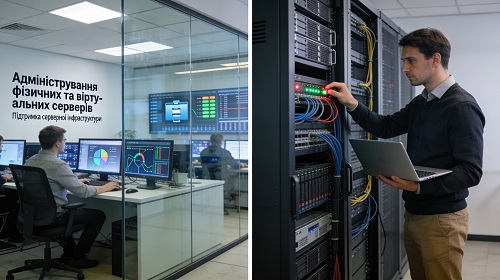
Administration of Physical and Virtual Servers
In modern business, server infrastructure forms the foundation of most information systems. Servers host databases, corporate applications, document storage systems, email services, and other critical company resources.
Server administration is a комплекс of activities aimed at maintaining the stable, secure, and efficient operation of server hardware and software. This includes server configuration, monitoring, troubleshooting, and ensuring the protection of corporate data.
Professional administration of physical and virtual servers allows companies to ensure uninterrupted IT infrastructure operation, minimize technical risks, and maintain stable business processes.
Key Tasks of Server Administration
Installation and Configuration of Operating Systems
The first step in managing server infrastructure is the installation and configuration of server operating systems. Administrators deploy systems, configure them according to business requirements, and optimize performance settings.
A properly configured operating system ensures stability, efficient resource usage, and a high level of security.
Network Configuration
For stable server operation, it is essential to properly configure the network infrastructure. Administrators set up IP addresses, DNS servers, gateways, and routing parameters.
This ensures reliable communication between servers, workstations, and network equipment.
Server Software Installation
System administrators are responsible for the installation and configuration of server software, including:
- web servers
- database servers
- mail servers
- file servers
- backup systems
- network firewalls
Regular software updates are also performed to improve security and performance.
Server Monitoring and Backup
Continuous server monitoring helps detect system overloads, hardware failures, and software issues in time.
Administrators implement monitoring systems that track server performance in real time. They also set up data backup systems to quickly restore information in case of failure.
Information Security
One of the key tasks is protecting servers from cyber threats. This includes implementing:
- network firewalls
- antivirus software
- access control systems
- data encryption
Regular security audits are conducted to identify vulnerabilities.
Troubleshooting
Servers may encounter technical issues related to hardware, software, or networking.
Administrators perform system diagnostics, analyze logs, and quickly resolve issues to restore stable operation.
Infrastructure Scaling
As businesses grow, they often need to expand their server capacity. This requires scaling the server infrastructure.
Administrators deploy new servers, expand storage systems, and optimize existing environments to meet increasing demands.
Benefits of Professional Server Administration
Professional server infrastructure management provides several key advantages:
- stable operation of servers and corporate systems
- enhanced information security
- reduced risk of data loss
- fast issue resolution
- optimized IT infrastructure performance
With professional server administration, companies can focus on their core business without dealing with technical problems.
Conclusion
Administration of physical and virtual servers is a critical component of a stable and reliable modern business environment. Proper configuration, monitoring, backup, and security ensure uninterrupted IT operations.
By entrusting server administration to experienced professionals, a company gains reliable technical support, system stability, and efficient use of server resources.